So far, I’ve spent more time in the embassy than I did while in Mauritania, which has its pros and cons. I’ve written several press releases, read through applications for exchange programs, and participated in a panel deciding which candidates would get to be nominated for the International Visitor Leadership Programs (IVLP). But I did get to venture out into the real world during my first week in Rwanda for an event at a girls’ boarding school in Kigali.
One of the big programs that’s going on while I’m here is “Everybody Reads Rwanda”. Basically, the Public Affairs Section of the embassy bought about 500 books and distributed them to schools, libraries, and other groups of people around the country. People read them, and then participate in book discussions led by someone from the embassy. It’s all part of an effort to help increase English language ability (in both reading and critical thinking). [Side note: the government of Rwanda recently added English as an official language. Here’s an article from 2008 when the switch was announced. As you can imagine, simply declaring English as an official language does not mean that everyone can automatically speak it. So, the U.S. Embassy has a number of programs to help out in this area.]
But back to the book discussions. This year, embassy staff selected “The Five People You Meet in Heaven” by Mitch Albom. Now, if you know me, you might be able to guess that this book isn’t exactly my cup of tea, but I realize it is a very popular book that resonated with a lot of people, so I’m sucking it up and going with it. And it’s actually been very interesting to see just how profoundly the Rwandans who have participated in the book discussions were affected by it.
Which brings me back to my out-of-embassy excursion. I was sent as the embassy representative to the book discussion at a girls’ boarding school. 19 girls, all of whom seemed to be around 15 or 16, had read the book and came prepared to discuss it.
First of all, the school was beautiful. It was a series of one-story, red brick buildings, connected by paths of loose stone gravel and bordered by manicured lawns and plenty of shade trees. 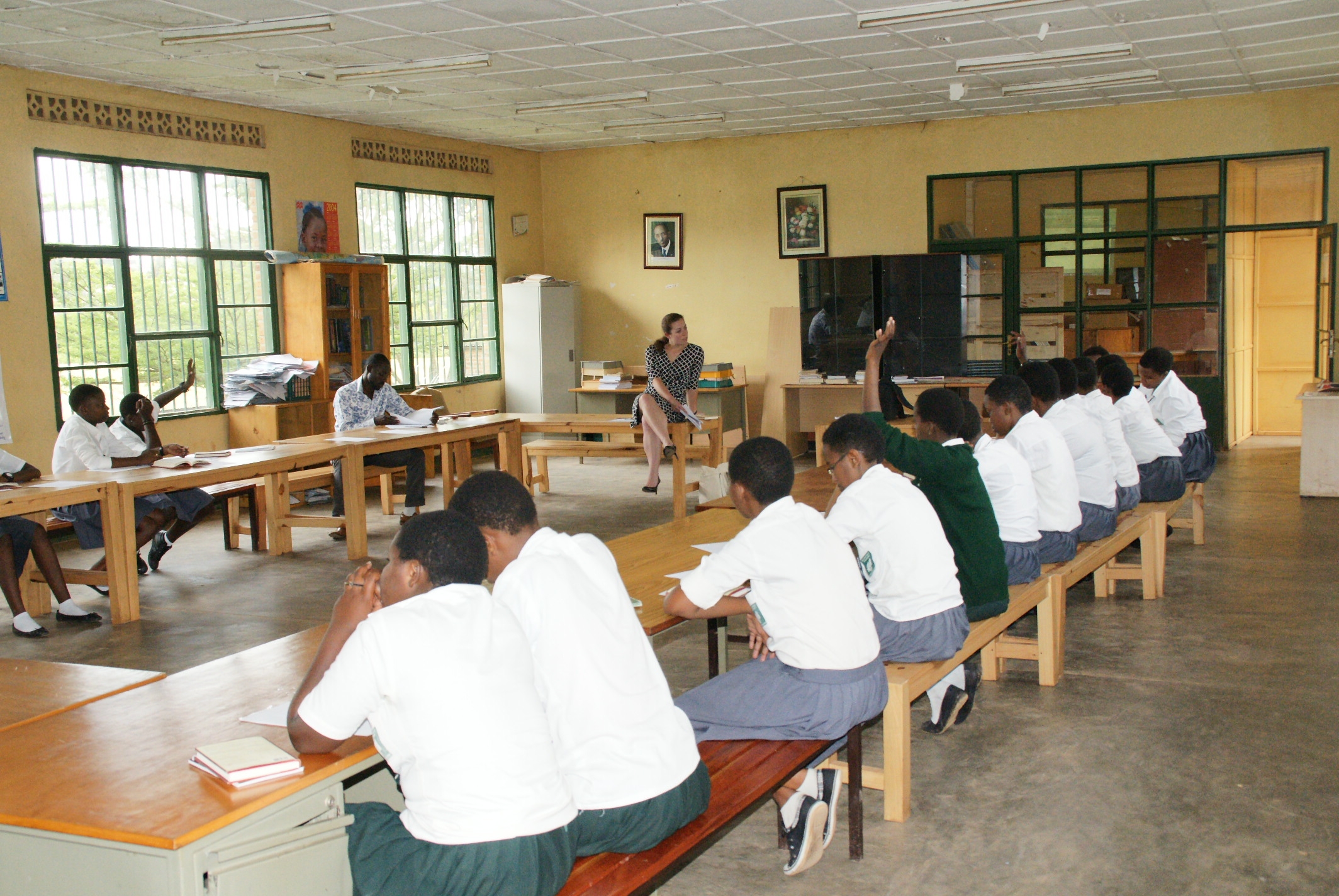 We had the discussion in what I think was a library, though there were sadly very few books to be seen (a common problem here and another reason for the embassy book program). I wasn’t sure what to expect, with less-than-fond memories of literature analysis from my own high school experience. BUT these girls were all over it. After a minute or two of hesitation and shyness, they all jumped in and, almost without exception, actively participated for almost TWO HOURS.
 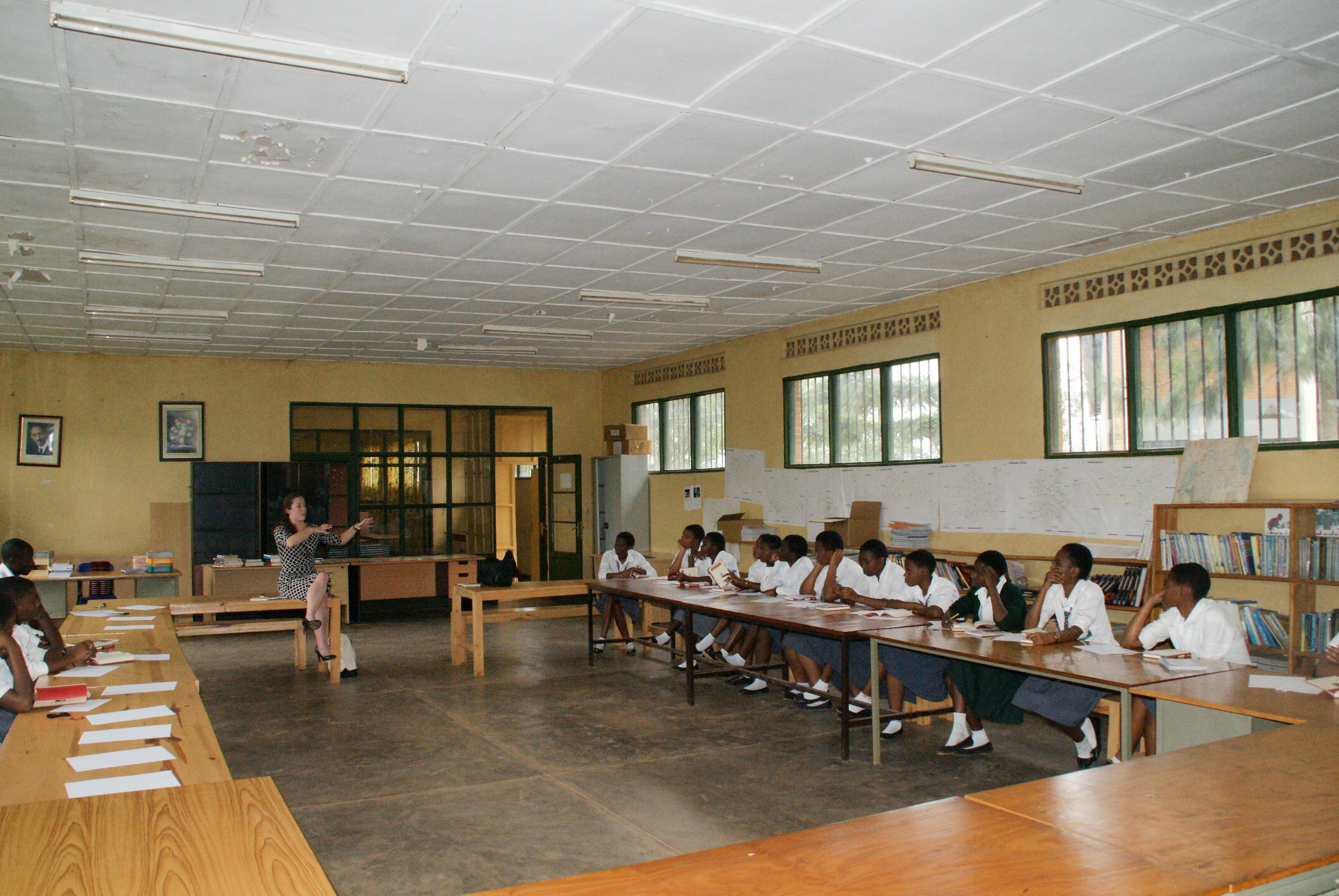 I had a list of prepared discussion questions, but I didn’t need to use them – the girls themselves came up with questions they had about the book and then proceeded to discuss those questions AT LENGTH. Many of them had several pages of notes in front of them that they had taken while reading. It was really cool to see how into it they were. Literary discussion is much better when there isn’t a “right answer” to one’s interpretation of the work. I always thought that was ridiculous and a sure-fire way to shut down any discussion.
But fortunately, I am not enough of an expert on literary analysis to even pretend like I have “the answers,” so I was not at risk of falling into that trap. Result: even though I didn’t love the book, I loved hearing the girls’ ideas and opinions about it – in great English, I might add.
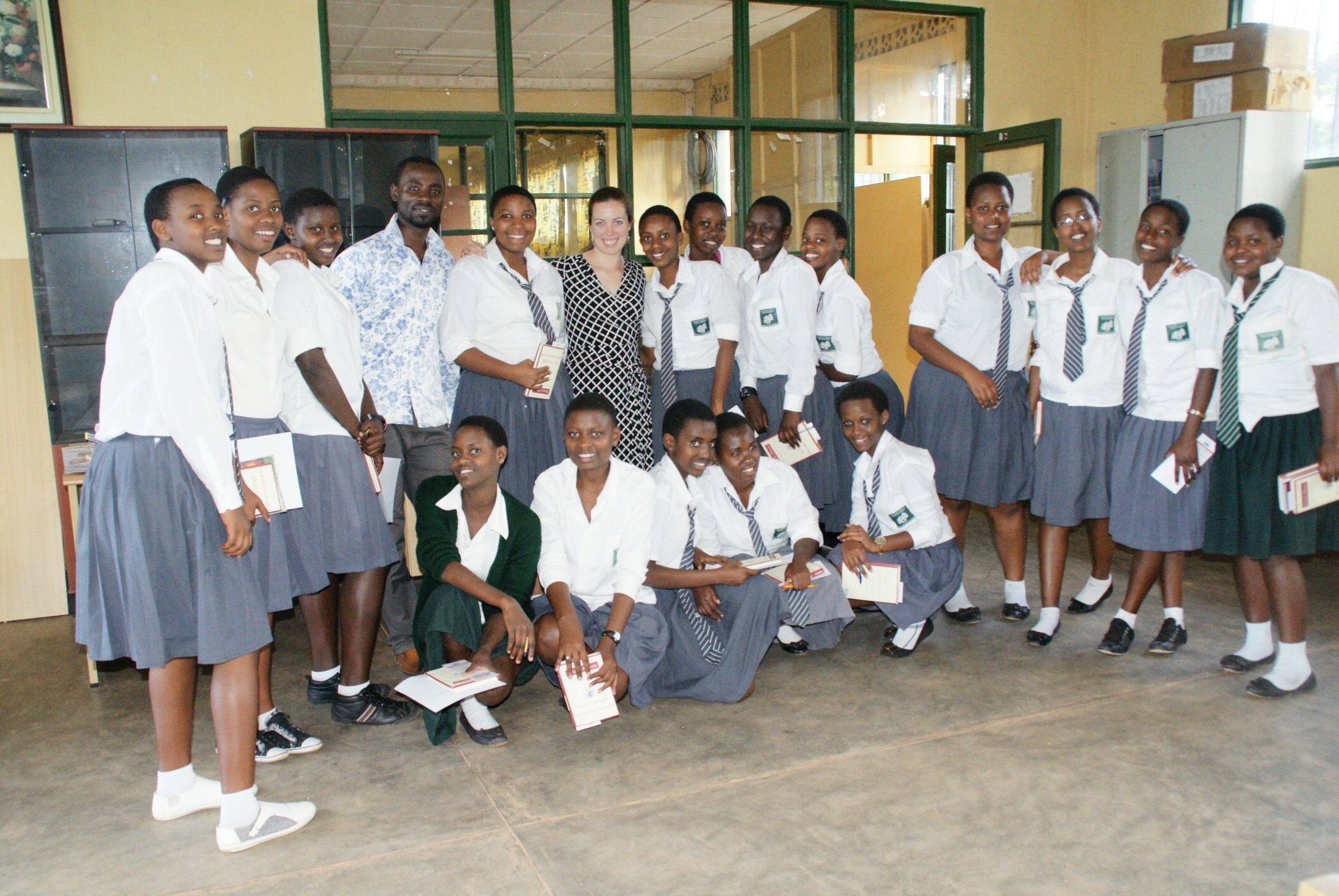
The “Everybody Reads Rwanda” participants at FAWE girls’ school in Kigali
 Toto...We're Not In NYC Anymore